Agreements are Crucial

A common cause of inefficiency at a startup is sloppy agreements.

Why are some startups less efficient or grow slower than others? A common reason that underpins each one is sloppy agreements. This manifests in a variety of ways

  • People don’t show up on time
  • Sales team doesn’t hit their quota
  • Junior employees flying first class and draining the bank account

The result of all of this is lack of productivity and decrease morale. The start slow and it becomes a bad place to work.

Expectations vs. Agreements

Expectations and assumptions are inward thoughts. Everyone has them. The key is pulling out your inward expectation and converting that into a handshake is making an agreement. That needs to happen, over and over again.

To dig in deeper on this, watch this

Agreements as the Antidotes

The best way to make your startup work well is with tight agreements. This means:

  1. They are accurately and thoroughly defined and codified (the what)
  2. They are agreed upon by both sides (the handshake)

Both must happen.

This is for big tasks and small

Examples of Agreements

Hiring 2 new SDR’s. You (the CEO) agree with CRO to hire 2 more SDRs. You agree that you’ll interview 6-10 people who have at least 2 years of SDR experience, hire two at a price range of $50-80k and no equity. The hiring process will include a screening call, a functional interview and a test. After picking the best 2, you’ll build a 30-60-90 day plan to get them up to speed as fast as possible. After one month you’ll expect them to be booking 1 meeting a day.

Showing up to the exec team meeting by 9am with the pre-read materials read and prepared to discuss. This is conveyed to your team that the meeting will start at 9am and you shouldn’t be late.

Showing up on Time

Honoring Commitments

Being a responsible receiver of commitments means that you only accept commitments you think will be kept. This means you need to deal with any issues or concerns you have up front instead of waiting to find out if you’re right.

This also means you must recognize that a commitment someone makes to you is your commitment too. To honor a commitment means you’ve committed that you’re going to make it happen as well. It requires that your continued support the other person, like checking in with them when you have a concern about whether or not the commitment is going to be kept.

Punishing people for not keeping commitments is a victim mindset. Take responsibility for the handshake being two-sided and check-in with them to ensure it gets completed.

Adjusting an Agreement

The team relies on you to hit your agreements. But things change, assumptions aren’t correct, deals fall through. It’s your responsibility to tell your counterpart immediately if you don’t think you’ll hit your agreement.

If you don’t, you’ve broken the agreement. As a result, the rest of the company can’t adjust, productivity slips and morale sinks lower.

For example: You hit traffic and you’ll be late to the 9am exec team meeting. Call the team and alert them that you’ll be there at 9:10. Now they know to start without you and can plan accordingly.

What’s important is that you get a NEW commitment when an agreement needs changing or hasn’t been kept and you make sure this time there’s support in place so it will be kept this time.

Consequences

It is your responsibility to hold others accountable. You do this in 2 ways

  1. If someone breaks an agreement, you need to point this out to them immeidately. There’s no need for an apology on their end, just an acknowledgement that (a) they should make agreements they can keep and (b) they meet their agreements either by completing them or alert others if they need changes
  2. If someone repeatedly breaks agreements, there is only one option: this person can no longer be part of your company.

Some examples

  • Managing Down. For each direct report you have, you should have a tight agreement on when your 1:1 is, what’s expected of them during that 1:1 and how it should be run. Coming out of that 1:1, you should have an greement of what’s expected of them over the next week. Codified, accurate, and agreed upon
  • Managing Up. Whether its your boss the board of directors, it is your responsibility to know exactly the agreement between you and them of what your job is. Failure to do this will result in insecurity and often bad perceived performance (which leads to firings). This sounds obvious but it’s incredibly common.
  • In your company, every employee should have an agreement of what success in their job should be over some time frame (6 month, 12 months 18 months). This is what is expected for them to accomplish during this time frame and, if done, you agree that they will have done an excellent job.
  • Every time you decide to hire someone, there should be a tight agreement on who is responsible for that hire, what it is where’re looking for, the pay range, and the timeframe
  • GTM. Top of funnel is crucial for any B2B business, is there a tight agreement with someone in your org of exactly how many new meetings booked are expected each week?

Common Pitfalls

  1. A lot of executives can’t keep track of all the commitments that have been made by them or to them. This is why it’s important to write them all down and be able to see them at all times.
  2. People have a tendency to say yes to any commitment that’s asked of them. Even though it’s hard to say no, remember the whole reason we make commitments is to help us reach our goals. You only want to make agreements that contribute to your company’s goals and vision. Remind people that not agreeing to a commitment is just as important as creating an agreement.

Coach K’s Practice Masterclass

This came from a post from The Athletic that has been deleted but I wanted to re-post it. At first glance, this is about an 18-year-old plan for a basketball practice by the legendary Coach K. But really, it’s about leadership and the many things that go into it: organization, delegation, adaptability and standards.

Coach K (real name: Mike Krzyzewski), is one of the most successful coaches in history:

  • 1,202 wins, the most of any men’s college basketball coach
  • Five national championships
  • Three Olympic gold medals as head coach of Team USA

Krzyzewski is retired from Duke and has stated to TheAthletic, that he doesn’t miss the games. But he does miss the preparation, saying, “I do miss developing a practice plan.”

Continue reading “Coach K’s Practice Masterclass”

3-Step Process to Success

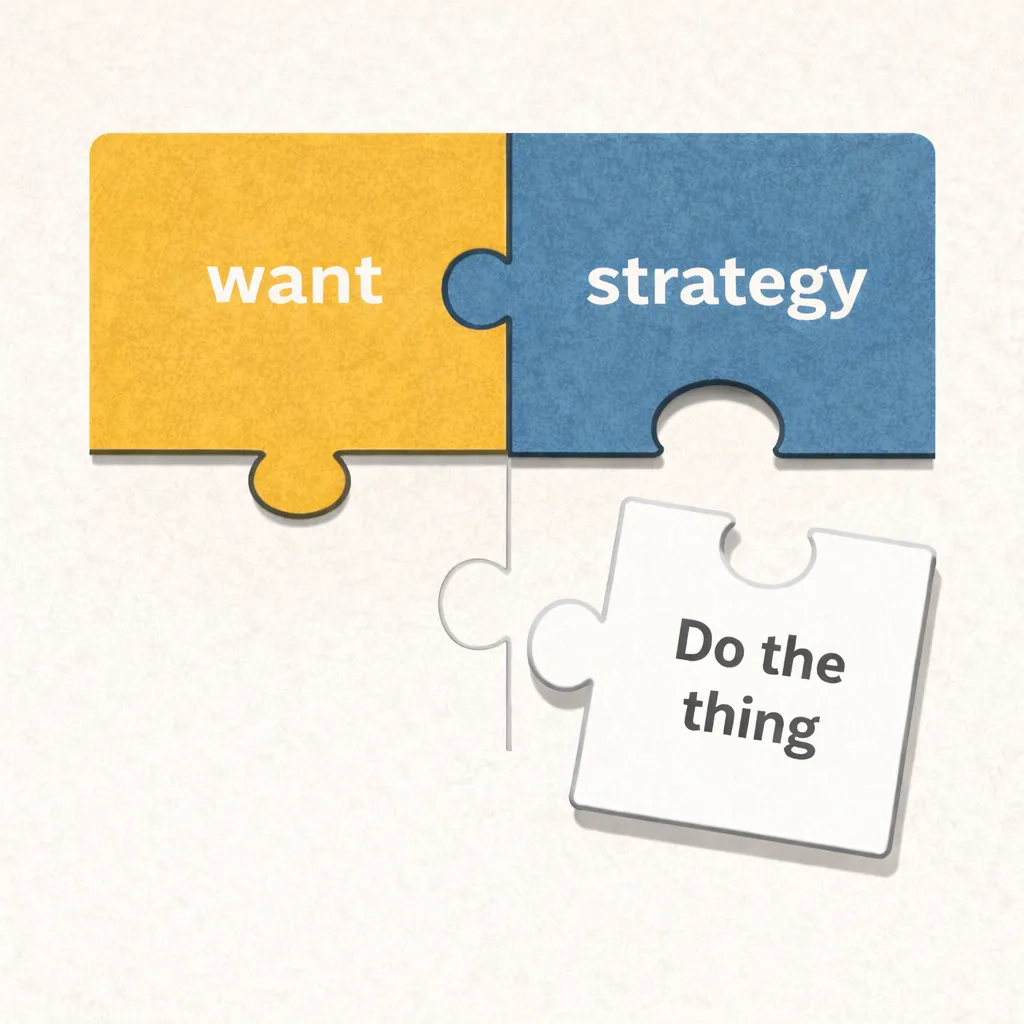
Over the past months I’ve come to realize that much of my process with my clients is this three step plan:

  1. Figure out what you really want
  2. Decide on a strategy of how to get it
  3. Work on that

That’s it. That’s the whole thing.

Step 1: Figuring out what you want

This could be anything. For a person, this is where they want to go in life. It could be a promotion, a raise, a new house, moving to a new location, anything. Many people are reactive, they just chase whatever opportunity is in front of them rather than setting a course for what they really want.

Continue reading “3-Step Process to Success”

Monkey and the Pedastal

I came across this piece of wisdom in Annie Duke’s book Quit, and I love it.

The concept also shows up in Google X—the division responsible for tackling the company’s most audacious bets. Self-driving cars. Internet balloons. Robotics.

At X, they use a mental model to prioritize work:

If your goal is to get a monkey to recite Shakespeare while standing on a pedestal…
You don’t start by building the pedestal.

Why?
Because building a pedestal is easy. Training a monkey to speak? That’s the hard part—and also the part that determines whether the whole idea is viable.

Their rule: Train the monkey first.

Continue reading “Monkey and the Pedastal”

Travis Kalanick’s Fundraising Tips

Back in 2005-2013, I was close with Uber founder Travis Kalanick.

Before he started Uber, he was Founder/CEO of RedSwoosh which was an interesting P2P software provider for content companies. RedSwoosh was eventually acquired by Akamai and Travis made a bit of money.

At that time he worked as an advisor helping companies get off the ground and raise money (see CrowdFlower, Honestly, etc.). He then went on to be an epic fundraiser himself with Uber and CloudKitchens. I wanted to share some of his tips as he was an expert at the art of negotiating and raising money. This list is his tips for success that he initially blogged at Swooshing.com (his old blog). At the bottom there’s a great video of him talking about working with seed stage startups and how to grow. It’s a great watch.

Continue reading “Travis Kalanick’s Fundraising Tips”

Willpower Isn’t Enough

I found this quick 4min video really interesting. It talks about how willpower isn’t enough to accomplish change. Similarly, neither giving someone an explanation of what’s wrong.

To truly get change, you have to have an insight. A new thought. That “aha” moment is what really drives change.

Here’s the link to the video